
How to Add Music to iPhone without iTunes


To reset an iPhone passcode you forgot, in most cases, you must restore your iPhone to its factory default state. You then can set it up and restore data from a recent backup.

You forgot the passcode to unlock your iPhone—it's possible that there is a long period of putting your device aside, or perhaps you reset the passcode frequently and can't remember exactly what it's—and your first instinct is to panic.
To reset a forgotten iPhone passcode, you need to erase your device entirely—though you can restore your data afterward if you maintain a recent iCloud or computer backup. However, if you recently changed your passcode on iOS 17 or later, you can unlock it right from the lock screen using your old one.
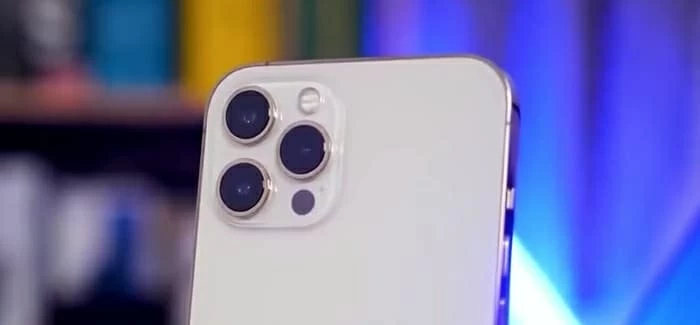
Resetting iPhone passcode when locked involves restoring the device to factory and erasing all data and settings.
Getting locked out of your iPhone isn't a good feeling, but you don't have to let it ruin your day. Apple has offered official instructions about resetting iPhone passcode if you've forgotten it. There are also several impressive third-party apps, Appgeeker iPhone Unlocker for example, that could be strong replacement candidates if you can't or don't want to go with the Apple's route.
Here's everything to know about how to reset passcode on iPhone, ranging from Apple's native wireless tricks to specialized desktop utility software.
There are a few things you need to know before you begin perform a passcode reset.
1. If you don't have an old passcode available to use, every legitimate reset method erases your iPhone's local storage to remove the lock screen and passcode, which means it deletes any personal data, downloads, and preferences you have saved on the iPhone.
2. After you reset the iPhone passcode using the process below, you need your Apple Account (iCloud) login details to bypass the activation lock so you can complete the setup. If you don't remember your Apple ID and password, go to Apple iforgot page to recover them.
3. If you routinely back up to iCloud or Finder, you can restore your content in minutes during the initial setup screen post-reset.
Related: How to transfer photos from iPhone to PC
Now, let's dive into how to reset a forgotten passcode on iPhone.
Requirements: Windows PC or Mac, USB-to-Lightning/USB-C cable
Best For: reset security lockout/ unavailable screen, or bypass iTunes connection errors.
When standard Apple methods stall—often due to driver conflicts, unrecognized hardware, or stuck recovery screens—a dedicated desktop tool provides a streamlined path forward. Appgeeker iPhone Unlocker (iKnockin) is a specialized utility designed to bypass 4-digit/6-digit passcodes, Touch ID, Face ID, and custom alphanumeric credentials.
iPhone Unlocker works on both Mac and Windows desktop and laptops.
Why it's a top pick
Unlike iTunes, which often hangs on error codes (such as Error 4013 or 3194) when attempting to communicate with a locked phone, Appgeeker iPhone Unlocker automates the firmware detection and recovery sequence. Its interface eliminates the need to decipher obscure command sequences, guiding you through downloading the correct iOS package, removing the lock screen, and resetting the passcode in a few clicks.
To reset your password via Appgeeker iPhone Unlocker software, use the following steps:
1. Launch the software and select the main feature card labeled "Unlock iOS Screen."
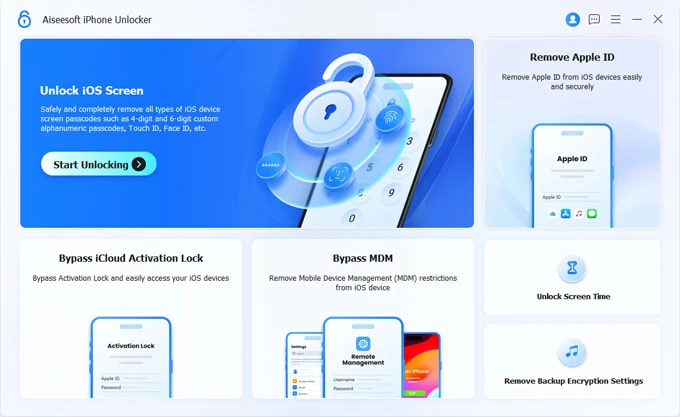
2. Connect your iPhone to the computer with a working USB cable. If your computer fails to recognize the locked device automatically, it displays animated on-screen instructions tailored to your specific model.
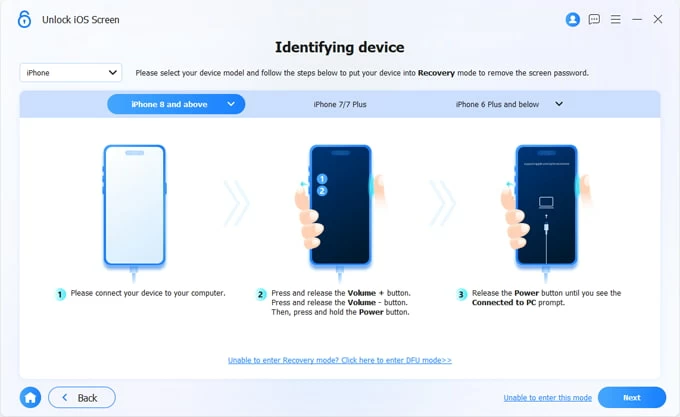
3. Once you're recognized, check your phone details, followed by "Start Now" button.
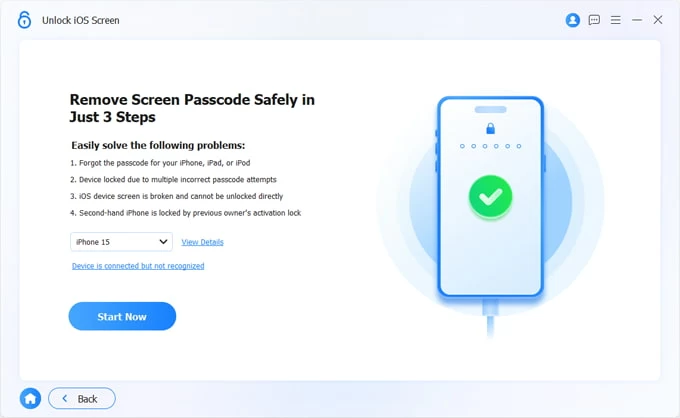
4. The application automatically identifies your iPhone model and fetches the latest compatible iOS firmware from official servers. The download process can take a while, but you can continue to use your computer while the download is happening.
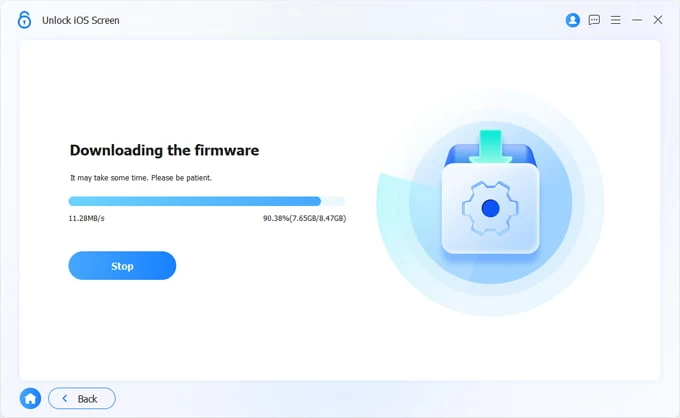
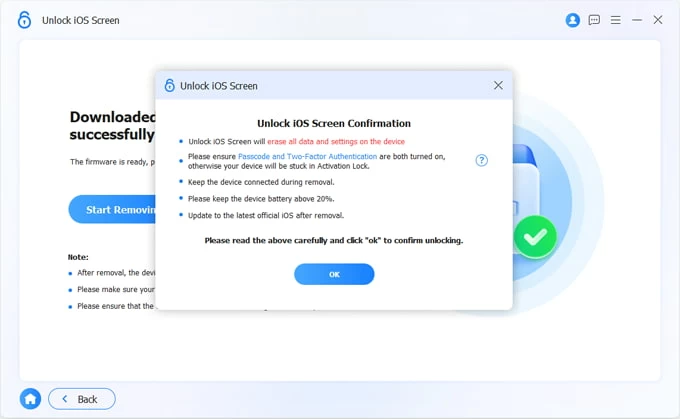
5. Once the firmware finishes downloading, click "Start Remove." You will see a warning describing the process and explaining all your data and settings will be erased, including your password.
Press "OK" to confirm. The application extracts the package, wipes the lock screen parameters, and installs a clean version of iOS.
You'll see a new screen and a large circular progress indicator.
Once the progress bar is at 100%, your iPhone reboots to the standard "Hello" setup screen! Follow the onscreen prompts to set the iPhone up again and, if you have backup of your data, sign into your iCloud account to restore it.
Related: How to reset an iPad without password.
Requirements: iOS 15.2 or later, active Wi-Fi or Cellular connection, Apple ID password
Best For: Fast, computer-free resets directly from the lock screen
If your device runs iOS 15.2 or higher and remains connected to a cellular or Wi-Fi network, Apple provides a direct path to reset your passcode for iPhone without plugging into a computer.
How to reset iPhone passcode you forgot from lock screen:
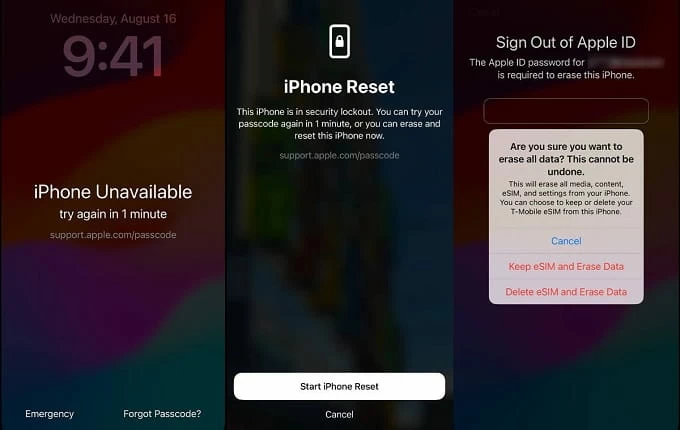
After multiple incorrect passcode attempts, your device enters the iPhone Unavailable or Security Lockout state. A small option labeled Forgot Passcode? (or Erase iPhone on iOS 15.2 - 16 versions) appears at the bottom corner of the screen.
1. Enter wrong passcodes on the lock screen until the timer screen appears with the "Forgot Passcode?" or "Erase iPhone" link at the bottom.
2. Tap it and confirm that you want to proceed with a full factory reset.
3. Enter your Apple ID Password to sign out of your Apple Account and turn off Activation Lock.
4. Tap "Erase iPhone" once more. The device reboots, displays the Apple logo with a progress bar, and clears all data along with the forgotten passcode.
Related: Photos disappeared from iPad
Requirements: Mac (macOS Catalina or later via Finder) or Windows PC (with iTunes / Apple Devices app installed)
Best For: Users who prefer native, first-party tools and already have an established desktop sync environment
If your iPhone isn't connected to Wi-Fi or lacks the on-screen reset prompt, Apple's official desktop method involves forcing your device into Recovery Mode and restoring it using your computer.
If you're on PC with iTunes installed, make sure you've updated the iTunes to the latest version.
iPhone 8, iPhone SE (2nd/ 3rd gen), and iPhone X or newer: Press and quickly release Volume Up. Press and quickly release Volume Down. Press and hold the Side button until the recovery mode screen (computer + cable icon) appears.
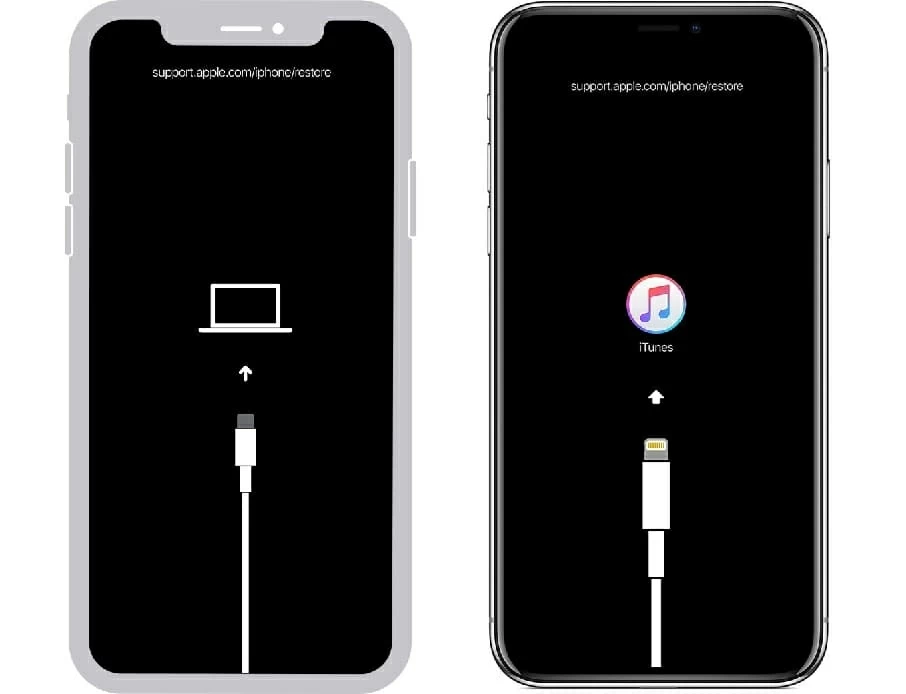
Connect your iPhone to your computer while in Recovery Mode.
Open Finder (on macOS) or iTunes / Apple Devices app (on Windows).
A pop-up dialog will detect a problem with the iPhone, offering options to Update or Restore.
Click "Restore." Your computer downloads the latest iOS build and reinstalls it on the phone. Note: If the download takes longer than 15 minutes, your iPhone exits recovery mode, and you must repeat the button sequence.
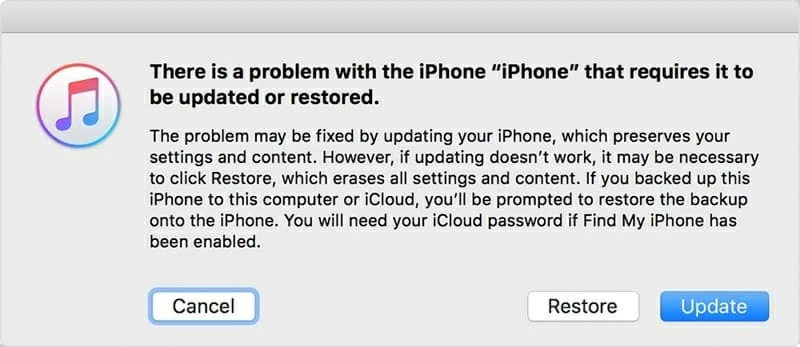
Resetting passcode on iPhone via Recovery mode goes through a similar process: erasing data on the device and restoring it to factory settings.
If you've synced your iPhone with computer previously, there's another possible way for iPhone passcode reset through iTunes or Finder. This method only works for a situation that you just forgot the passcode rather than disabling the device, and the Find My iPhone is already turned off.
1. Open iTunes or Finder on your computer that you sync the iPhone with. You'll want to update the iTunes to the latest version if it is available.
2. Connect your iPhone to the computer with a cable.
3. Wait for the iTunes (or Finder) to finish the sync and backup.
4. Select your device icon from the upper left corner of the iTunes window. In Finder, you will find it in the sidebar.
5. Click Restore Backup.
6. Follow the instruction to complete the restore process.
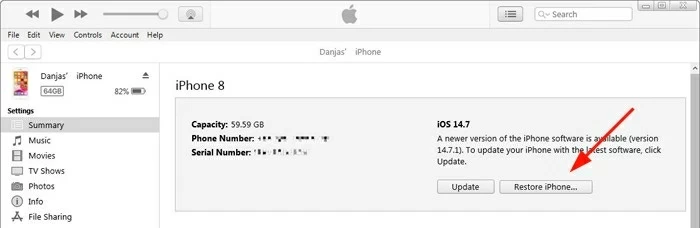
If the iPhone doesn't appear in iTunes or Finder, or you're asked to turn off Find My option in your phone before doing a restore, resort to other solutions outlined in this article.
Related: How to delete Apple ID without password
Requirements: Web browser, Apple ID credentials, active internet on the locked iPhone
Best For: Remotely resetting a misplaced or lost phone, or when physical buttons are damaged
Apple's Find My feature isn't just for locating misplaced hardware; it also doubles as a remote security wipe tool that allows you to reset a forgotten passcode on your iPhone or iPad.
1. First, log in to icloud.com/find with your Apple ID and password from browser on your computer. If you haven't one, you may need to borrow one from your friend. You can also try using another phone or tablet to access the site.
2. When you've successfully logged into iCloud, you'll see a screen like the one below where all your Apple devices are listed in "All Devices" at the top navigation bar.
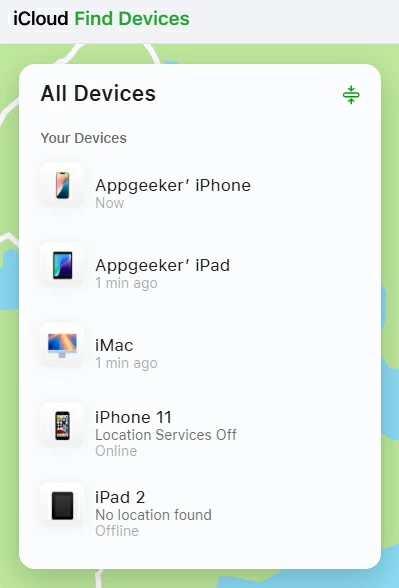
3. Be sure to choose the iPhone from the list.
4. Click "Erase This Device" in the device menu.
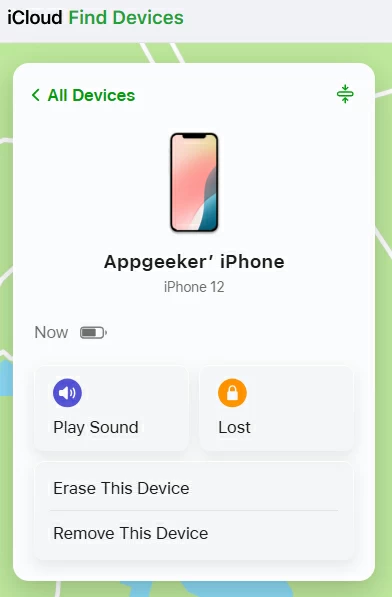
5. Confirm your selection and enter your Apple ID password when prompted.
As long as the target iPhone is powered on and connected to Wi-Fi or cellular data, the command triggers immediately, wiping the device and removing the passcode barrier.
f all is well, the device should be back to the day it left the factory in a quick manner.
You now have access to your iPhone without entering the passcode.
Here are the steps you need to take to reset your iPhone passcode if you can get into the device and know the current code.
1. On your iPhone, open Settings app.
2. Scroll down the page until you see either Face ID & Passcode or Touch ID & Passcode, depending on which model you have.
3. Tap it and enter your existing passcode.
4. Scroll down to Change Passcode.
5. You'll be asked to enter your current code one more time to proceed.
6. Enter a new passcode to replace it. iOS defaults to a six-digit code, but you can tap Password Options just above the keypad to change it to Custom Alphanumeric Code, Custom Numeric Code, or 4-Digit numeric Code.