How to Record MP3 on Mac


Explore both wired and wireless ways to transfer your own MP3 files to your iPhone without iTunes for offline listening, whether you're using a PC or a Mac.

Whether using a cable or wireless method, there are multiple options for iPhone users to add MP3 files without iTunes.
If you keep a collection of MP3 files on your computer, you might want transfer them to your iPhone for offline listening. While iTunes is often the first method people consider for adding MP3 to an iPhone, it can cause an unwanted issue: syncing through iTunes may overwrite the existing Music Library on iPhone, leading to unnecessary data loss.
To avoid this risk, many users may prefer to use alternative methods that allow them to transfer MP3 to iPhone without iTunes.
In this guide, we'll walk you through several simple ways to transfer MP3 from computer to your iPhone without iTunes. From wired transfers to wireless syncing, these methods make it easy to your local MP3 tracks without data loss.
Whether to add MP3 files or other music files, Appgeeker iPhone Data Transfer can be a top non-iTunes option. It lets you transfer music from a PC or Mac directly to iPhone's Music app, ensuring seamless playback while preserving the original, lossless audio quality.
While iTunes is Apple's official tool for transferring music from a computer to an iPhone, it typically requires a cable connection and can overwrite existing music library during syncing, which may lead to unwanted data loss. For these reasons, you may prefer alternative methods to transfer MP3 to your iPhone without using iTunes.
Yes. There are several ways to transfer MP3s to an iPhone without iTunes, whether you want to keep your current music library intact or simply don't have a cable available.
Whichever method you choose, these alternatives make it easy to add your own MP3s to iPhone without iTunes, preventing the risk of overwriting the existing music content you already have.
For transferring MP3 files to an iPhone without iTunes, Appgeeker iPhone Data Transfer is one of the easiest options. It enables you to transfer music between computer and iPhone in both directions, without affecting any current content on your phone.
Compatible with both Windows and macOS, the tool lets you transfer MP3 files directly to iPhone's Music app for offline listening. Whether you're moving a few MP3 tracks or importing an entire music folder, the transfer process is simple and straightforward by drag-n-drop.
Another useful feature is that it can automatically detect incompatible music files and convert them into iOS-supported formats, ensuring smooth playback on iPhone. Beyond MP3 files, it also supports transferring ringtones, audiobooks, voice recordings, photos, videos, movies, etc.
Available for all iOS models and versions, here's how to transfer MP3 from computer to iPhone without iTunes, while keeping everything in your current Music Library:
Step 1. Open Appgeeker iPhone Data Transfer and connect the target iPhone via a USB cable. If asked, allow your phone to trust this computer for data access.
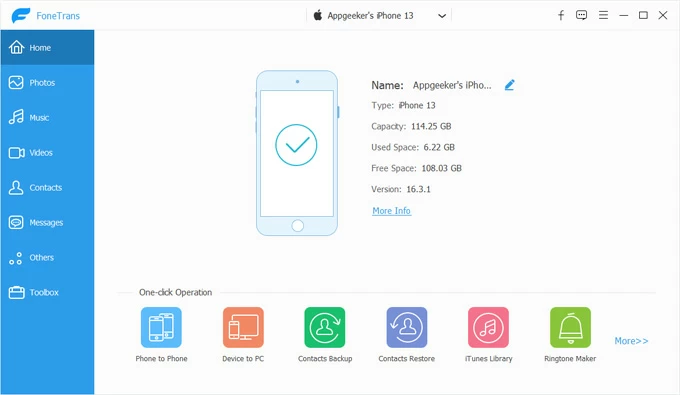
Step 2. Select Music tab on the left sidebar. From here, you can preview the entire iPhone Music Library and manage the songs and playlists as you want.
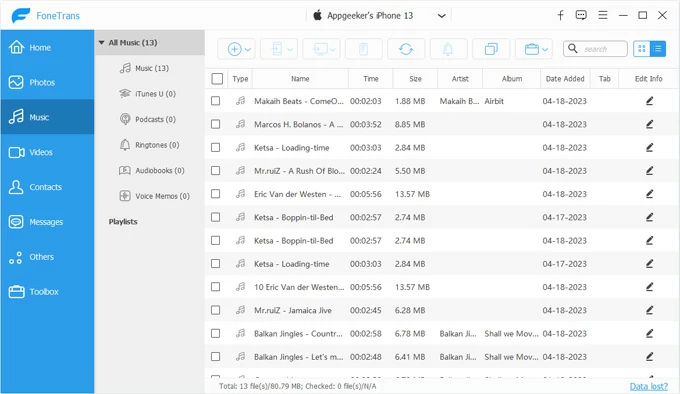
Step 3. Open the computer folder where your MP3 files are stored, then select the one you want.
Step 4. Drag and drop MP3 files to this iPhone Music window.
Alternatively, you can click the Add + button at the top toolbar, then choose Add File(s) or Add Folder to select the MP3 files you'd like to transfer to your iPhone.
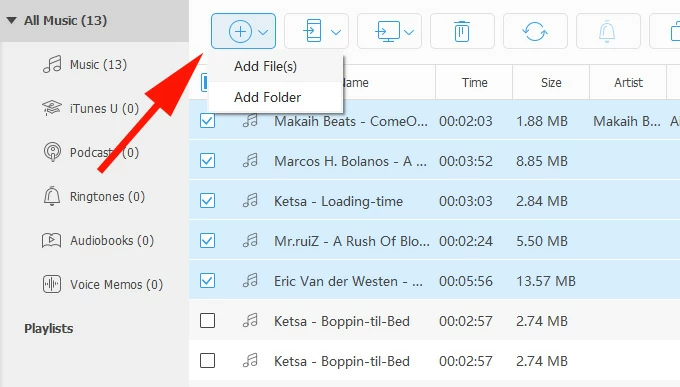
After the transfer, open the Music app on your iPhone to access and play the MP3s you just added. They should appear in your Apple Music Library along with other existing songs.
It also works if you're looking to transfer music to iPhone from iTunes, or another iPhone, iPad, or iPod Touch.
Without using iTunes, some cloud storage and streaming services provide an alternative way to transfer your own MP3 files to iPhone wirelessly through an upload-and-download process.
Note: While these options allow for wireless transfers, they cannot add MP3 files directly to the Apple Music app on your iPhone. Instead, the downloaded music files can only be accessed and played within the specific app you used to upload or store them.
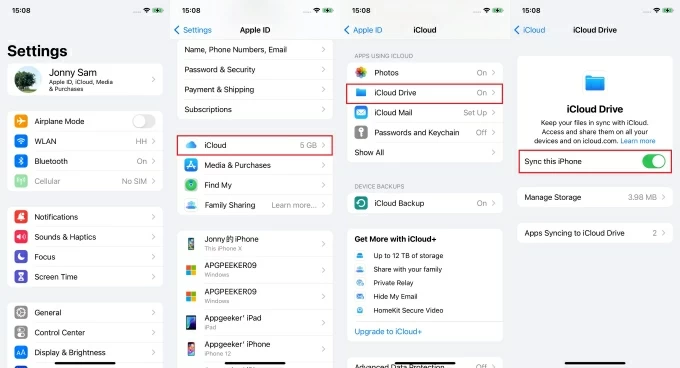
Without relying on iTunes, Apple's built-in iCloud Drive lets you upload MP3 files from a computer and then download them to your iPhone for offline listening within the Files app. To complete this computer-to-iPhone MP3 transfer, the process requires you to use the same Apple Account on both platforms and make sure that you have sufficient iCloud storage available.
Once you're ready, below is how to upload and download MP3 on iPhone without iTunes:
Step 1. Enable iCloud Drive on your iPhone.
Note: If you're transferring a large number of MP3 files, especially if they exceed Apple's free 5 GB of storage, you may consider upgrading your storage plan to iCloud + for more space.
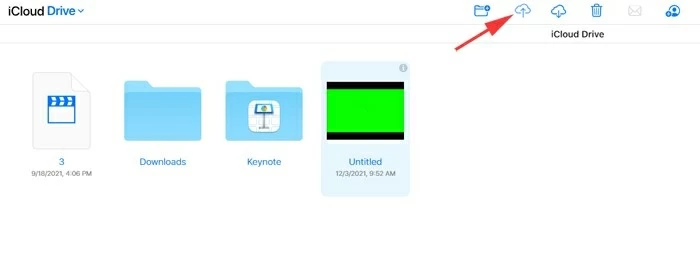
Step 2. Upload MP3 files from computer to your iCloud Drive.
Step 3. Download MP3 files on iPhone without iTunes.
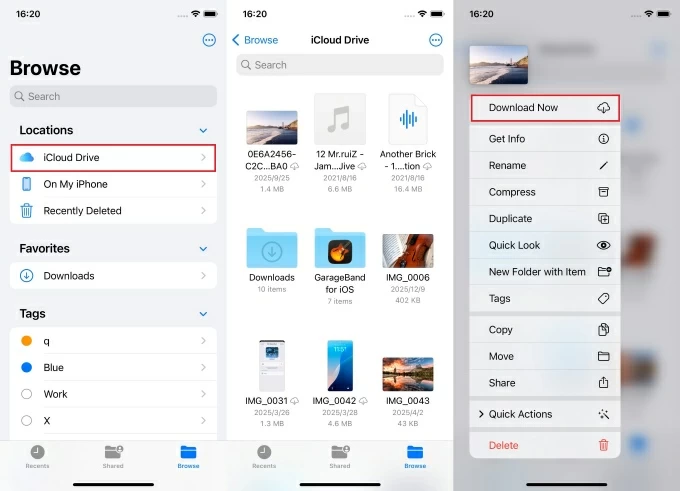
Once done, the MP3 files will be saved on your iPhone for local access and offline playback within the Files app. If the free 5 GB of storage isn't enough to transfer all your desired MP3 files, cloud services like Google Drive, OneDrive, or Dropbox can provide additional storage options.
Another wireless option for transferring MP3 to iPhone without iTunes is to use the media player app — VLC. Available on App Store, it offers a Wi-Fi Sharing feature that lets you enter a local IP address in your computer's browser and upload MP3 files directly to your iPhone.
To transfer MP3 without iTunes, ensure your iPhone and computer are connected to the same Wi-Fi network. Then, follow the steps below to use VLC Sharing via Wi-Fi:
1. Install and open VLC app on your iPhone from the App Store.
2. Select Network tab at the bottom and turn on Sharing via Wi-Fi option.
3. Once enabled, the Sharing via Wi-Fi option will show you two website addresses.
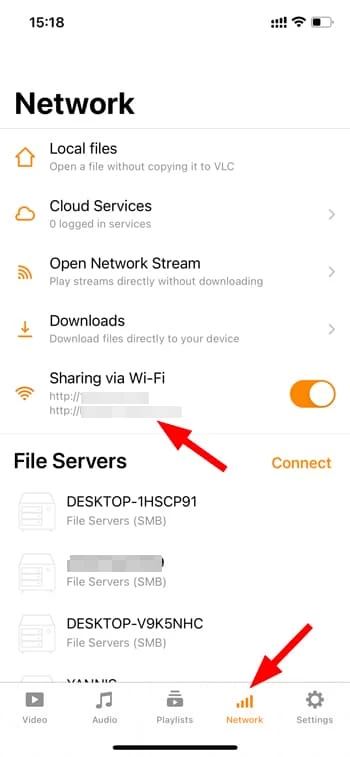
4. Open a browser on your PC/Mac and enter one of the URLs correctly, then hit the Enter key.
5. When the Sharing via Wi-Fi screen displays, drag and drop the MP3 files from your computer to this browser. Or, you can click the Plus icon in the top right and upload your MP3s from there.
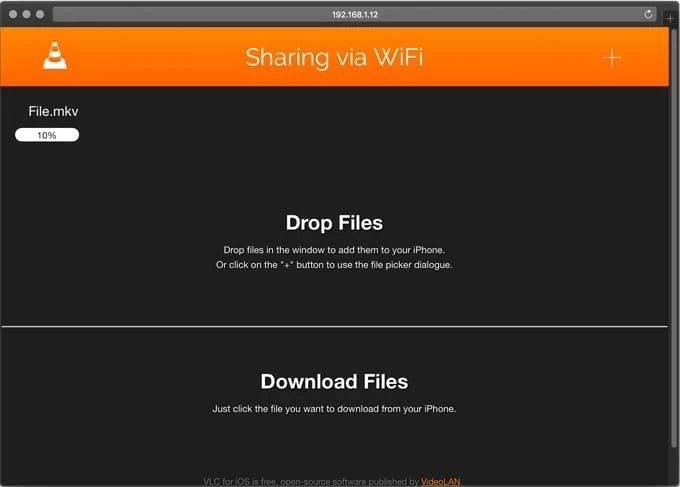
6. The shared MP3 files will automatically appear in the VLC app on your iPhone.
Depending on how many MP3 files you're transferring, it may take a short while to complete.
Streaming services such as YouTube Music can also help you transfer MP3 to your iPhone wirelessly without using iTunes. The platform allows you to upload a limited number of MP3 files for free and then access them from your iPhone for download. With a premium membership, you can upload and manage a larger music library. Below are the detailed steps:
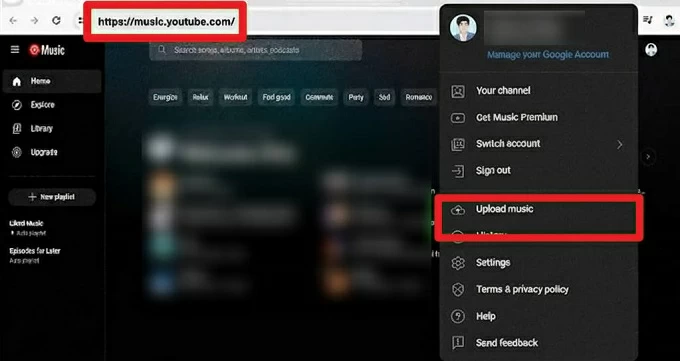
1. Access a computer browser and visit music.youtube.com.
2. Sign in to your YouTube Music account when prompted.
3. Click your profile picture and select Upload music in the expanded menu.
4. When a local folder opens, select the MP3 files you want to transfer to iPhone.
5. Click the Open button to upload the MP3 to your YouTube Music.
6. Open YouTube Music app on your iPhone. Ensure you're signed in with same account.
7. Navigate to Library > Songs > Uploads.
8. From all uploaded music files, select an MP3 track and tap the three dots next to it.
9. Select Download to get MP3 on your iPhone for offline playback.
This way, you can download the YouTube music on iPhone and enjoy your MP3 tracks on the go.
Using email is also a quick and free way for iPhone users to transfer MP3 without iTunes. However, keep in mind that most email services limit attachments to around 25 MB, making it more suited for sending just a few MP3 files rather than large collections.
After saving the files locally on your iPhone, choose to play the MP3 with another music app.
If you don't mind overwriting your existing music library but simply want an alternative tool to iTunes, Apple provides its own official options:
Both tools support transferring MP3 files to your iPhone without iTunes, and the process is generally similar. For example, here's how to transfer MP3 files from PC to iPhone without iTunes:
1. Install and open the latest version of Apple Devices app on your Windows PC.
2. Connect your iPhone to Mac using a USB or Lightning cable. If Trust This Computer prompt appears, tap Trust and enter your iPhone passcode to allow data access.
3. Select your iPhone in the from the left sidebar and click Music tab.
4. Tick Sync music onto iPhone option.
5. Select to transfer either Entire music library or Selected artists, albums, genres, and playlists. If you just want to transfer certain MP3 files, select the checkboxes next to them.
Note: If you cannot find the MP3 files in Apple Devices, open the Apple Music app on your Windows PC, and then drag and drop your MP3 files from computer to the Library section.
6. Choose to Include videos if needed.
7. Hit the Apply button to start music syncing.
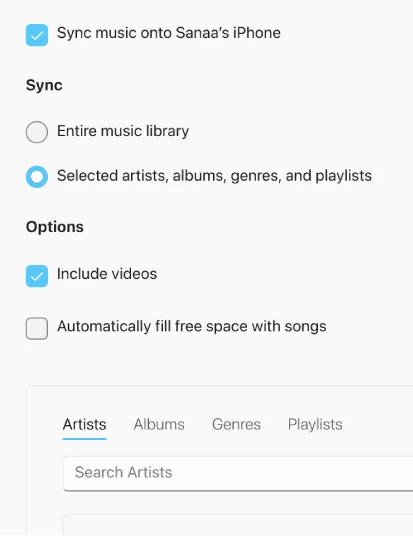
The selected MP3 files will be synced to your iPhone and replace everything in the Music app.
If you still cannot transfer music to your iPhone when dealing with MP3 files, check the following FAQs for more information.
Q1 - How can I add MP3 to Apple Music app on my iPhone?
There are several ways to add MP3 files directly to your iPhone's Apple Music app:
Q2 - Can I transfer MP3 files from a Windows PC to my iPhone without iTunes?
Yes. The official Apple Devices app can be used as an alternative to iTunes for transferring MP3 files from a Windows PC to an iPhone, no iTunes required.
If you want to avoid iTunes overwriting, using wireless options like YouTube Music can help upload local MP3 files from a PC and download them on an iPhone for playback.
In addition, third-party tools such as Appgeeker iPhone Data Transfer allow you to transfer MP3 files between a Windows PC and iPhone in both directions without data loss.
Q3 - How do I download MP3 on iPhone for free?
Cloud storage services (such as iCloud Drive, Google Drive, OneDrive, and Dropbox) offer free storage, ranging from 5 GB to 15GB. You can upload and store MP3 files in the cloud, and then download them to your iPhone.
Email is a quick and free option for sending smaller MP3 files and downloading them directly onto an iPhone.
Other reliable tools like Appgeeker iPhone Data Transfer may also allow limited free MP3 transfers to iPhone for offline listening, whether from a PC, Mac, or another iPhone, iPad, or iPod Touch.