Contacts Disappeared on Android? How to Recover Them


If you accidentally delete files from your Android phone, don't panic. This article will show you how to recover your deleted files or data to your Android device.

Using professional Appgeeker Android Data Recovery software, you can perform a comprehensive scan of your device and recover deleted files or data back to your Android phone without needing to factory reset it.
Deleted files don't disappear immediately—they still have a chance to be recovered on your Android phone.
In modern life, people can hardly live without their smartphones, as most data and files related to daily life or work are stored in this small device. When files are deleted—whether due to accidental operation, over-cleaning, app glitches, or system corruption—it can be incredibly frustrating, especially when the deleted files are critically important.
Don't worry! This guide will walk you through how to recover deleted files on Android. Whether you've deleted photos, videos, messages, contacts, WhatsApp chats, or other data, you'll find effective methods to restore your deleted files to your Android phone, preserving your important data and cherished memories.
Table of Contents
Many Android users believe that once a file is deleted, it disappears permanently. In reality, the Android system typically only removes the access permissions to the file rather than wiping the data itself.
When you delete a file, it doesn't vanish without a trace immediately. The unallocated sectors on the flash memory may still hold recoverable fragments until new write operations replace them. This makes data recovery a task that requires a delicate balance between urgency and caution.
In addition, many apps on modern Android phones—especially those handling important data like Photos, Messages, and Files—come equipped with a Recycle Bin. These are designed to give you an opportunity to get deleted files back to your Android phone, though they usually come with specific time limits.
Therefore, acting quickly after accidentally deleting files on an Android phone can significantly increase the success rate of recovery. The less the device is used after the deletion, the lower the probability that new data will overwrite the remaining file fragments.
In the Android ecosystem, the Recycle Bin (also known as Trash or Recently Deleted) acts as a guardian for data deletion, allowing you to restore deleted files back to their original locations on your Android phone.
When files are deleted from built-in apps like the Photos, Messages, Contacts, or Files, they are typically moved to a temporary storage area—the Recycle Bin—rather than being permanently erased right away. This temporary retention period usually lasts around 30 days. Once this window expires, the files are automatically deleted and become unrecoverable via this method.
Before attempting complex recovery procedures or installing third-party Android data recovery software, the simplest first step is to check the Recycle Bin or Trash folder to recover your deleted files on your Android phone.
1. Open the app where your deleted files were located.
2. Access the menu panel (usually three lines or dots), then select Recycle Bin, Trash, or Recently Deleted.
3. Browse the list of recently deleted files; you will also see the remaining time available before they are permanently deleted.
4. Select the files you wish to recover and tap the Restore option. Android will then return the deleted files to their original directories.
Note:
If the Recycle Bin is empty, or if you've manually cleared these deleted files, you will need to rely on Appgeeker Android Data Recovery software to perform a deep and comprehensive scan of your phone's storage. This process searches for residual file fragments, hidden metadata, and recoverable data sectors, then lets you preview and selectively restore them.
One major advantage of using Android Data Recovery software is its ability to recover a wide variety of file types, including:
Another key benefit is the ability to recover deleted files on an Android device without requiring a factory reset, which minimizes the risk of losing other data during the recovery process.
With its high-speed processing of large databases and robust recovery capabilities, Android Data Recovery software is an excellent choice for retrieving deleted data even if you don't have a backup.
Step 1: Connect Android phone to computer
After installing the software properly on your computer, open it and you will get an easy-to-navigate interface with three tabs on. Since you're going to recover deleted files from Android internal storage or memory card, select Android Data Recovery mode.
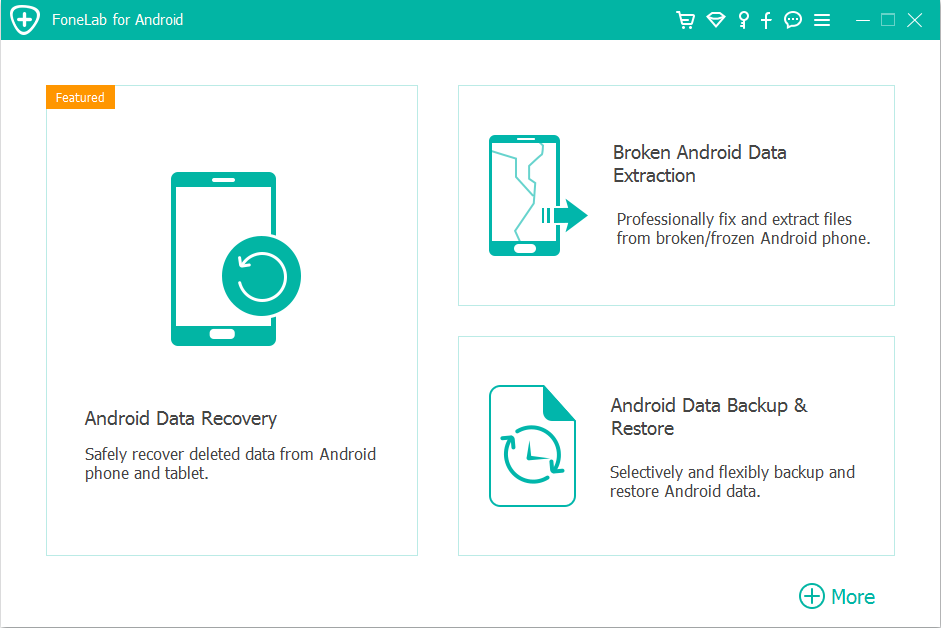
Then, connect your Android phone to computer using a USB cable.
Step 2: Enable USB Debugging to access data
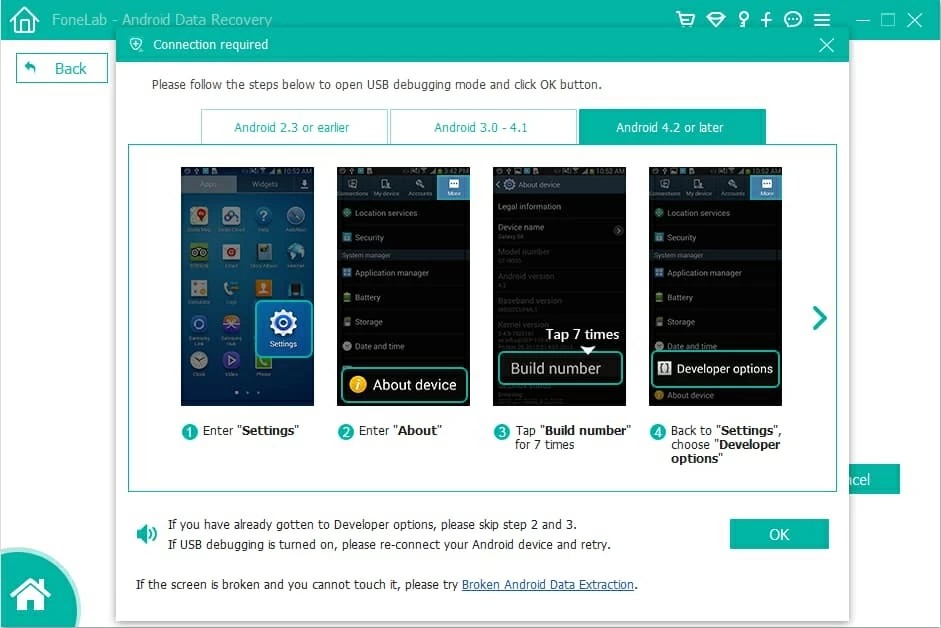
Once detected, the program will present you with simple instructions to turn on USB Debugging Mode on your phone. If you've done this before, skip to Step 3.
For more details, you can also refer to How to Enable USB Debugging Mode on Android.
Step 3: Choose Android file types to scan
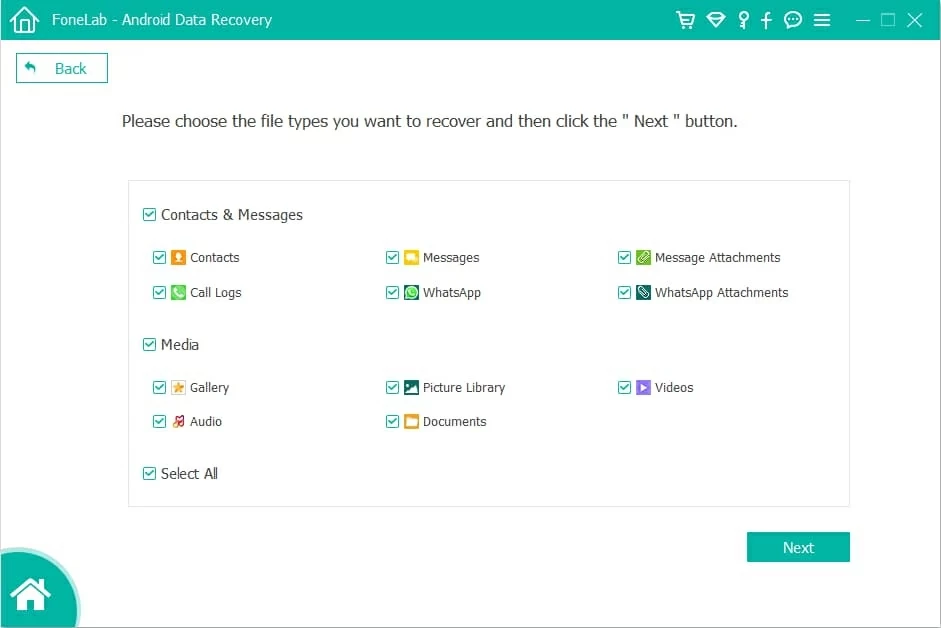
In next window, you'll be prompted to select which types of data you want this Android file recovery software to search. Check the data and click the Next to go on.
Step 4: Gain root permission for a complete scan
The program will check the device information and perform a basic scan of the device. If it can't find the files you need, it's suggested that you root the phone to access to the full Android system. (You can unroot the device after the recovery task.)
To do so, click the Rooting Tools button at the lower right position. At this point, you will be taken to an external website to download a free Android rooting tool — KingoRoot to root the device.
[Also Read: How to Safely Root and Unroot an Android Device with KingoRoot ]
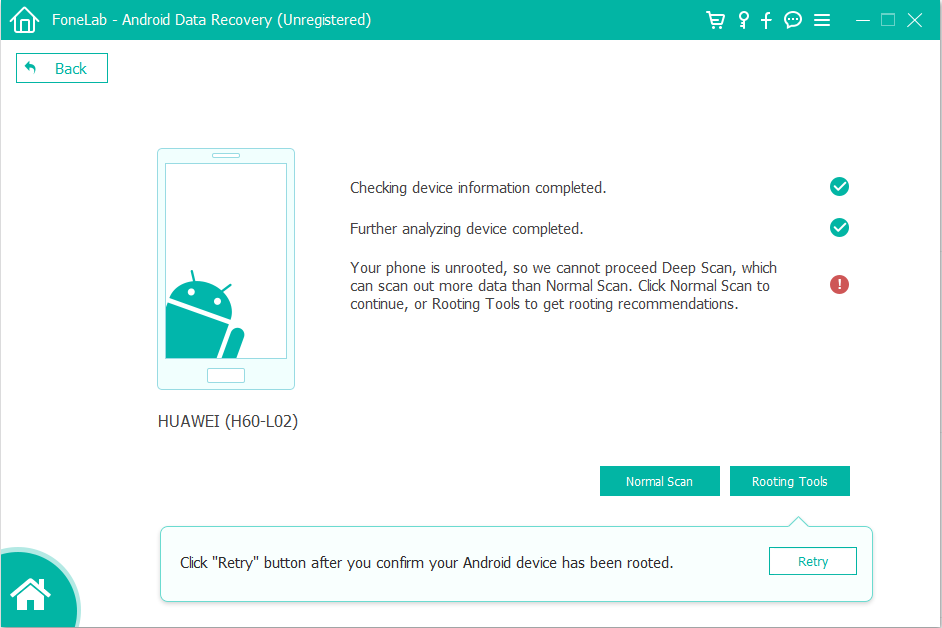
After you're rooted, this Android Data Recovery software will begin running a deep scan of your Android's phone memory and SD card to search for the deleted Stuff. Please be patient.
Step 5: Preview and recover deleted files from Android
When the scan is done, you can preview and sort the list of data files accordingly on the screen.
You can toggle the button to ON position on the top of the screen to display only the deleted items. It also offers an advanced search option in the upper right corner to help you quickly locate what you want from the results.
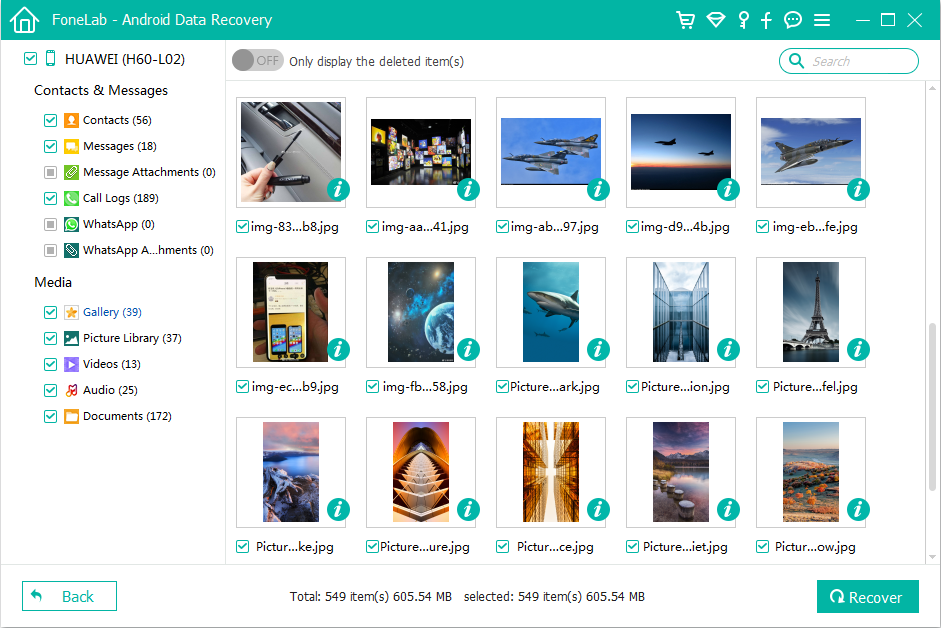
To get back the deleted data files from Android phone, just check the boxes next to items you want and then hit Recover button.
In opening dialog, you can click on "..." icon in the Output Folder field to specify the destination directory on your computer or just use the default folder for saving the recovered files.
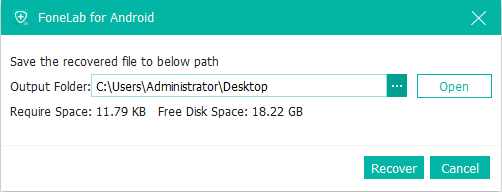
Hit the Recover button again to fire up the recovery process and you're good to go.
That's it! [More reading: how to migrate data from Android to iPhone]
When it comes to deleted files, especially the permanently deleted files, having a data backup is always the most reliable safety net. Many Android devices automatically sync data with online storage services, meaning that even if a file is deleted from the phone, a copy may still exist in a remote cloud location, letting you restore deleted files to your Android phone.
For most Android users, Google Backup is the most widely used option due to the deep integration between Google services and the Android system. If you backed up your phone data before the deletion occurred, you can recover the deleted files on an Android phone via Google One. The timing of the backup is crucial here—it determines whether the deleted files are included in the recoverable version.
However, one important caveat: A full Google backup restore typically needs to be completed during the initial setup process, which means you first have to erase your Android phone.
1. Go to Settings > Google > Manage backup, and ensure that Backup by Google One is turned on.
2. Check the date of your last Google backup to confirm that a backup exists from before the files were deleted.
3. If a full restoration is needed, reset your Android phone to its factory settings.
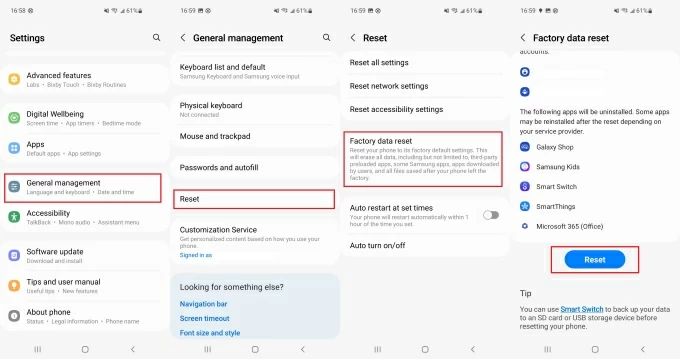
4. During the setup process after reset, sign in with the same Google account used for the backup.
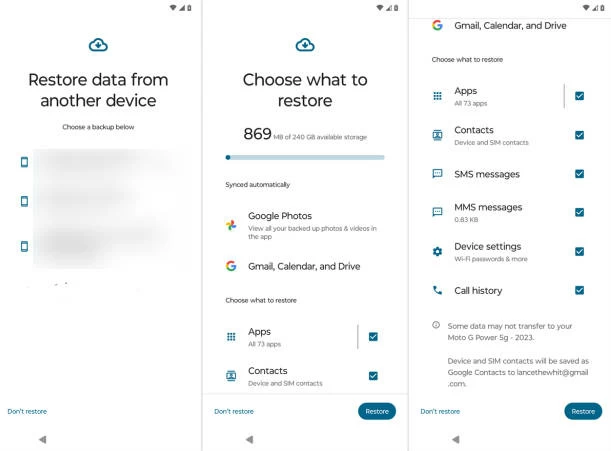
5. On the "Restore data from another device" screen, select the backup that contains your deleted files.
6. Choose the data types you wish to restore, then tap Restore to bring the deleted files back to your phone.
Some Android smartphone manufacturers offer their own cloud storage and backup ecosystems. For example, Samsung devices typically use Samsung Cloud to sync data such as photos, documents, and device settings.
If you are using a Samsung phone and created a backup before your files were deleted, you can use Samsung Cloud to roll back specific parts of your phone's data to a state prior to the data loss, effectively recovering your deleted files.
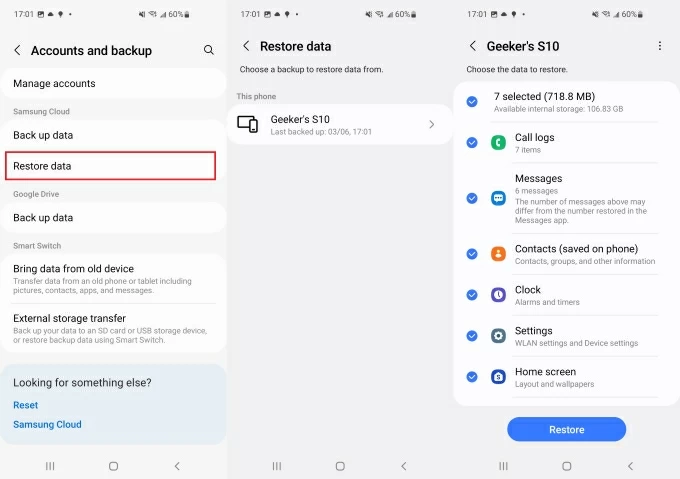
1. Go to the Settings menu and tap Accounts and backup. Alternatively, open the Samsung Cloud app on your phone, if available.
2. Under Samsung Cloud, select Restore data. You will see a list of backups from your registered devices.
3. Select the backup for your current phone, making sure the timestamp predates the deletion of your files.
4. Check the desired file types, then tap Restore. The device will start downloading in the background, merging the deleted data back into your current database without overwriting your existing files.
For WhatsApp data deleted on your Android phone, WhatsApp uses its own independent backup and restoration system, provided your device is linked to a Google account. It is important to note that WhatsApp recovery typically restores your entire chat history rather than individual files.
1. Go to WhatsApp Settings > Chats > Chat Backup and check the timestamp of your last backup. If backup captured the data before it was removed, you can proceed with confidence.
2. Uninstall WhatsApp from your device, then reinstall it from the Google Play Store.
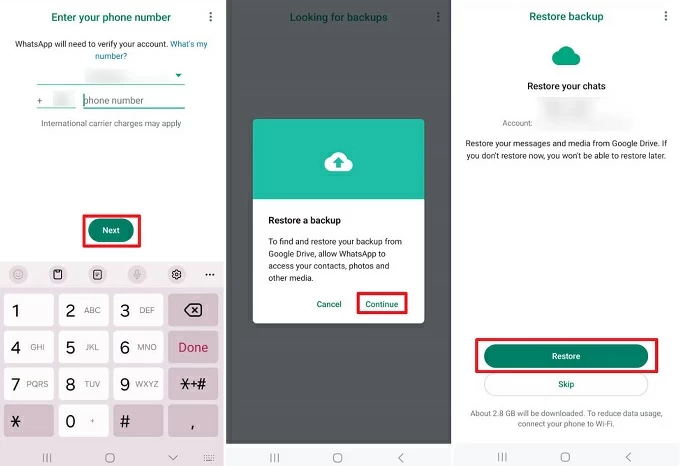
3. Launch the app and begin the account setup. You must use and verify the same phone number associated with your previous WhatsApp account.
4. On the "Restore or transfer chats" screen, select Restore from backup.
5. Tap Restore to begin moving your previously deleted WhatsApp data back into your conversation list.
Also see: How to transfer WhatsApp from Android to Android
Conclusion
In reality, recovering deleted files on an Android device is not about undoing a deletion, but rather locating residual traces before the system overwrites them. Whether through the Recycle Bin, cloud backups, or Appgeeker Android Data Recovery software, the window of opportunity to recover files is often much longer than most users expect.
1. Can I recover permanently deleted files on Android?
Yes, it is sometimes possible to recover your permanently deleted files on an Android phone. Even after a file is removed from the trash folder, the underlying data may still remain in the device's storage until new data occupies it. Using Appgeeker Android Data Recovery software or restoring from cloud backups can help retrieve files that no longer appear in the file system.
2. Where do deleted files go on Android?
Upon the deletion of files, they may go to several different locations depending on the app or system feature used. Many gallery apps and file managers move deleted files to a Trash or Recycle Bin folder for a limited period. If no trash folder exists, the system simply removes the file reference while the actual data remains in storage temporarily.
3. How to restore deleted files on Android without a backup?
If no backup is available, recovery may still be possible using Appgeeker Android Data Recovery software that scans the device's memory for remaining data fragments. However, success depends on whether the deleted files have already been overwritten by new data.
4. Can files be recovered from Android after a factory reset?
We know that it's possible and easy to get lost files back from Android in common situation, we now come to the problem that all Android users dread - Factory Reset. This wholly depends what type of factory reset was done.
If it was just a type of re-install of the app, or clean the full folder of the drive, then the files created before may still hidden in somewhere on the Android phone memory, and you have a great chance to restore them. But if you performed a complete reset of the device and restore the system to default state, then the phone memory have been wiped and any bits of files became gibberish. All are gone.
5. Can I restore app data from Android?
Google Drive enables you to back up app information and settings on your Android device through Google account. If you have any backups, you can get your lost data back. Google has more details about Back up or restore data on your Android device here.